
A career in web design offers a compelling mix of creativity and technical skill. But beyond the satisfaction of building beautiful and functional websites, what can you expect in terms of financial reward? The question, “How much does a web designer earn?” is one of the most common for aspiring and established professionals alike. The answer, however, is not a single number.
A web designer’s income is influenced by a wide array of factors, from geographical location and experience level to specialisation and employment type. This guide will provide a comprehensive look at the potential earnings for web designers. We will explore the various factors that determine a website designer’s pay, compare average salaries, and offer actionable tips to help you boost your web designer income.
Key Factors That Influence a Web Designer’s Salary
The website designer salary is not a one-size-fits-all figure. Several key variables interact to determine your earning potential. Understanding these factors is the first step toward maximising your income in this dynamic field.
1. Experience Level
Experience is arguably the most significant factor affecting pay. Like most professions, web design has a clear path of progression where compensation increases with proven expertise and a strong portfolio.
- Entry-Level (0-2 years): Junior web designers are typically recent graduates or career-changers. They possess foundational knowledge of design principles, HTML, CSS, and perhaps some JavaScript. Their role often involves supporting senior designers, making small updates to existing sites, and learning on the job. Their starting salary reflects this learning phase.
- Mid-Level (2-5 years): With a few years of experience, a web designer can manage projects with more autonomy. They have a solid portfolio, can handle client communication, and possess a deeper understanding of user experience (UX) and user interface (UI) design. Their salary sees a notable increase from the entry-level stage.
- Senior-Level (5+ years): Senior designers are experts in their field. They often lead design teams, set the creative direction for major projects, and mentor junior staff. Their expertise extends to complex problem-solving, advanced technical skills, and strategic thinking. This level of responsibility commands a significantly higher web designer income.
2. Geographical Location
Where you work plays a massive role in how much you earn. Major technology hubs and cities with a high cost of living typically offer higher salaries to attract and retain talent.
In the UK, for instance, a web designer in London can expect to earn considerably more than someone in a similar role in the North of England or Wales. This “London weighting” compensates for the higher living expenses in the capital. Similarly, in the United States, salaries in tech centres like San Francisco, New York, and Seattle will be much higher than in smaller, more rural towns. The rise of remote work has started to balance this, but geographical location remains a powerful influence on website designer pay.

3. Specialisation and Skill Set
The term “web designer” is broad. Specialising in high-demand areas can dramatically increase your earning potential.
- UX/UI Design: Designers who specialise in User Experience (UX) and User Interface (UI) are highly sought after. UX designers focus on the overall feel and usability of a product, while UI designers focus on the visual layout and interactive elements. A professional with strong skills in both is extremely valuable.
- Front-End Development: While some designers focus purely on visuals, those who can code their designs using HTML, CSS, and JavaScript are more versatile. Advanced front-end skills, including knowledge of frameworks like React or Vue.js, can lead to a higher salary.
- E-commerce: Specialising in e-commerce platforms like Shopify, Magento, or WooCommerce is another lucrative path. Businesses need experts who can design online stores that are not only visually appealing but also optimised for conversions.
- Responsive Design & Mobile-First: With the majority of internet traffic coming from mobile devices, expertise in creating seamless experiences across all screen sizes is no longer optional—it’s essential.
4. Employment Type: Freelance vs. Full-Time
The way you choose to work also impacts your income and how you earn it.
- Full-Time Employment: Working for a company or agency provides a stable, predictable salary, benefits like paid time off and pensions, and a structured work environment. The website designer salary is paid regularly, offering financial security.
- Freelance: Freelancing offers unparalleled flexibility and the potential for a higher overall income. Freelancers can set their own rates, choose their projects, and work with multiple clients simultaneously. However, this path comes with the responsibility of finding clients, managing business finances, and covering your own benefits and taxes. A freelancer’s income can be less predictable, with high-earning months followed by quieter periods.
Average Web Designer Salary: A Regional Breakdown
To give you a clearer picture, let’s look at some average salary figures. These numbers are estimates and can vary based on the factors discussed above, but they provide a useful benchmark.
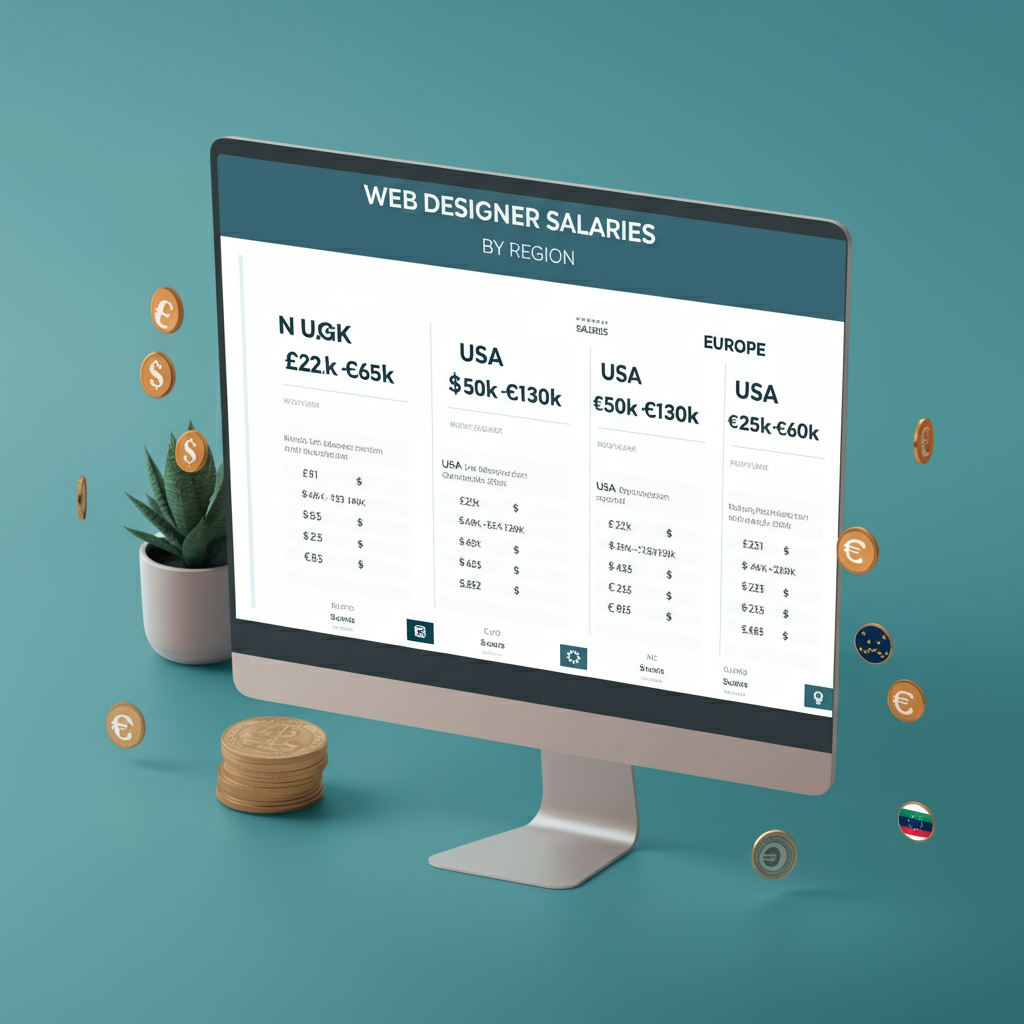
Web Designer Salary in the United Kingdom
- Entry-Level: £22,000 – £28,000 per year
- Mid-Level: £30,000 – £45,000 per year
- Senior-Level: £45,000 – £65,000+ per year
Salaries in London can be 10-20% higher than these averages. A senior web designer or a UX/UI specialist in a London-based tech firm could earn significantly more.
Web Designer Salary in the United States
- Entry-Level: $50,000 – $65,000 per year
- Mid-Level: $70,000 – $90,000 per year
- Senior-Level: $95,000 – $130,000+ per year
In major tech hubs like the San Francisco Bay Area, senior roles can easily surpass $150,000. The national average website designer pay is pulled up by these high-paying regions
Web Designer Salary in Europe
Salaries across Europe vary widely.
- Germany: A mid-level web designer might earn between €45,000 and €60,000.
- France: The average is slightly lower, around €35,000 to €50,000 for a similar role.
- Spain & Portugal: Salaries are generally lower, with mid-level roles earning between €25,000 and €35,000.
- Nordic Countries: Countries like Sweden and Denmark offer higher salaries, often comparable to those in Germany.
These figures illustrate how crucial location is when assessing your potential web designer income.
Freelance Web Designer Income: The Other Side of the Coin
Freelancing operates on a different model. Instead of an annual salary, freelancers typically charge per project or per hour.
- Hourly Rates: A freelance web designer’s hourly rate can range from £25 per hour for a beginner to over £100 per hour for a seasoned expert with a niche specialisation. A common rate for a competent freelancer in the UK is around £40-£60 per hour.
- Project-Based Pricing: Many freelancers prefer to charge a flat fee for an entire project. This provides clarity for the client and rewards the designer for efficiency. Project fees can range from a few hundred pounds for a simple landing page to tens of thousands for a complex e-commerce site or corporate redesign.
A successful freelancer’s annual income can easily exceed that of their full-time counterparts. However, it’s vital to remember that this gross income must cover business expenses, taxes, pension contributions, and periods without client work. The potential is high, but so is the responsibility.
How to Increase Your Web Designer Income
Whether you’re just starting or looking to advance, there are concrete steps you can take to boost your earnings.
1. Never Stop Learning
Technology and design trends evolve rapidly. Staying current is non-negotiable.
- Master New Tools: Learn the latest design software (e.g., Figma, Sketch) and coding frameworks.
- Understand Analytics: Learn how to use tools like Google Analytics to understand user behaviour. A designer who can prove their designs achieve business goals is invaluable.
- Dive into UX/UI: If you’re primarily a visual designer, invest time in learning the principles of UX research, user testing, and information architecture.
2. Build a Stunning Portfolio
Your portfolio is your single most important marketing tool. It’s more persuasive than any CV.
- Showcase Your Best Work: Be selective. It’s better to show 5-7 outstanding projects than 20 average ones.
- Write Case Studies: Don’t just show the final design. Explain the problem, your process, the challenges you faced, and the solution you delivered. Use data to demonstrate the project’s success.
- Include Personal Projects: If you’re new to the field, create your own projects to demonstrate your skills. Redesign a popular app or create a concept for a fictional company.
3. Develop Your Soft Skills
Technical skills will get you in the door, but soft skills will advance your career.
- Communication: Learn to articulate your design decisions clearly and persuasively to clients and stakeholders.
- Business Acumen: Understand your clients’ business objectives. Frame your design solutions in terms of how they will help the client achieve their goals (e.g., increase sales, generate leads, improve user engagement).
- Negotiation: Get comfortable talking about money. Research industry standards and learn to negotiate your salary or project fees confidently.
4. Specialise in a Niche
Instead of being a generalist, become the go-to expert in a specific area. This could be designing for a particular industry (e.g., healthcare, finance, non-profits) or mastering a specific platform (e.g., Shopify, Webflow). Specialists can command higher fees because their expertise is rare and valuable.
5. Network Effectively
Build relationships with other designers, developers, and potential clients.
- Attend Industry Events: Go to conferences, meetups, and workshops.
- Be Active Online: Participate in design communities on platforms like LinkedIn, Dribbble, or Behance. Share your work, offer constructive feedback, and engage in conversations.
- Build Your Personal Brand: Start a blog, a YouTube channel, or a podcast sharing your knowledge. This positions you as an expert and attracts opportunities.
The Future of Web Designer Pay
The demand for skilled web designers remains strong. As businesses continue to rely on their digital presence, the need for effective, user-friendly websites is not going away. The roles may evolve, with a greater emphasis on UX, accessibility, and data-driven design, but the core function remains crucial.
Ultimately, your website designer salary is a reflection of the value you provide. By continuously honing your skills, strategically positioning yourself in the market, and effectively communicating your worth, you can build a financially rewarding and creatively fulfilling career in web design.